16 Jun 2026
Analyzing Volatility Profiles Across Game Libraries to Optimize Bonus Utilization Strategies
Volatility profiles in slot game libraries determine how bonus funds convert into sustained play sessions and potential returns, and operators maintain extensive catalogs where these profiles vary widely across providers and titles. Players who examine these patterns can align bonus structures with specific game characteristics such as hit frequency, payout distribution, and feature trigger rates. Data collected from multiple gaming jurisdictions shows that libraries containing a balanced mix of low, medium, and high volatility options allow for more precise allocation of promotional credits.
Defining Volatility Categories in Modern Game Libraries
Low volatility titles deliver frequent smaller wins that help maintain bankroll stability during bonus wagering periods, while medium volatility games introduce moderate swings that often align with tiered bonus release schedules. High volatility options concentrate returns in less frequent but larger payouts, which suits bonuses with extended playtime allowances. Researchers at the University of Nevada Reno documented these distinctions through analysis of thousands of game sessions and found that libraries with clear volatility tagging improve player decision accuracy when matching games to bonus terms.
Game libraries from major developers now include filtering tools that sort titles by volatility metrics derived from mathematical models, and these systems update regularly to reflect new releases. Observers note that such categorization helps users identify patterns across hundreds of available slots without requiring manual calculation of each game's return distribution.
Matching Bonus Structures to Volatility Data
Bonus offers typically specify wagering multipliers and eligible game types, which interact directly with volatility levels present in a library. Low volatility selections often complete wagering requirements faster because consistent small wins accumulate toward the target amount, whereas high volatility choices may extend play duration but increase variance in final outcomes. Reports from the Australian Gambling Research Centre indicate that players who diversify across volatility tiers within a single bonus period achieve more predictable completion rates than those who focus on one category exclusively.
Platform analytics in June 2026 reveal increased usage of volatility dashboards that display real-time session statistics, and these tools integrate library-wide data to suggest game sequences that optimize remaining bonus funds. The approach allows users to shift between categories as bonus balances decrease, adjusting for changing risk exposure without violating terms.
Library-Wide Analysis Techniques
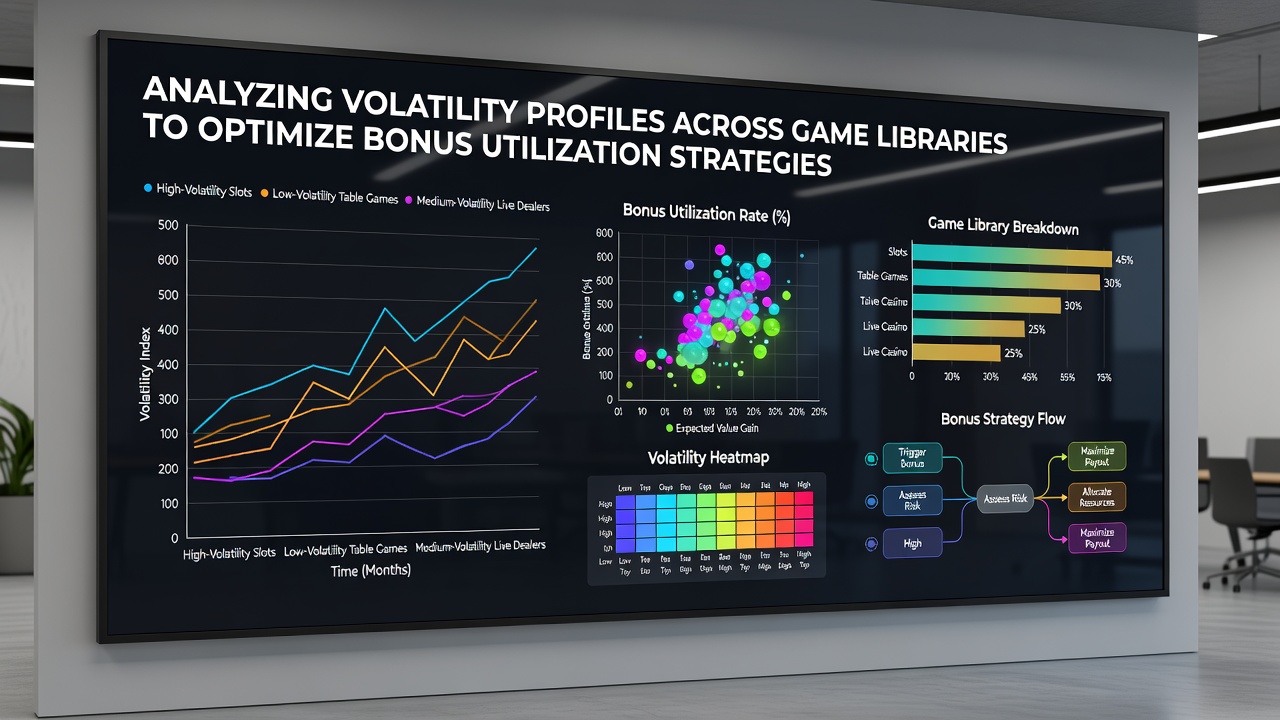
Comprehensive reviews of game libraries involve mapping volatility scores against bonus eligibility lists, and several operators now provide downloadable datasets that include standard deviation figures alongside RTP values. Those who apply statistical clustering methods can group similar titles and test allocation strategies across sample sessions. Evidence from Canadian regulatory filings demonstrates that libraries with transparent volatility documentation correlate with higher bonus redemption efficiency across user segments.
Cross-referencing multiple providers within one library also highlights regional differences in how volatility manifests, since certain markets favor specific payout structures. This comparison supports the construction of rotation schedules where bonus portions move between volatility bands according to remaining wagering obligations and current session performance metrics.
Implementation Across Diverse Platforms
Operators update their libraries monthly with new titles, which requires ongoing monitoring of volatility shifts that affect existing bonus strategies. Automated tracking systems flag when additions alter the overall profile distribution, and users can recalibrate their approach accordingly. Studies compiled by the European Gaming Institute show that libraries maintaining at least thirty percent representation in each volatility tier provide the greatest flexibility for bonus optimization across different promotional formats.
Practical application often begins with allocation of initial bonus amounts to low volatility selections for steady progress, followed by measured transitions into higher volatility options once wagering thresholds drop below critical levels. This sequence appears consistently in aggregated platform data from multiple regions and supports sustained engagement without rapid depletion of funds.
Conclusion
Analysis of volatility profiles across game libraries supplies a structured framework for aligning bonus terms with game characteristics, and the availability of detailed library data supports informed selection processes. Continued expansion of filtering tools and session analytics in 2026 enables more refined matching strategies that account for both individual title metrics and broader catalog composition. Regulatory reports from various jurisdictions confirm that transparent volatility information contributes to measurable improvements in bonus utilization outcomes when applied systematically.