5 Jun 2026
Bonus Round Activations and Their Influence on Long-Term Player Engagement in Digital Casinos
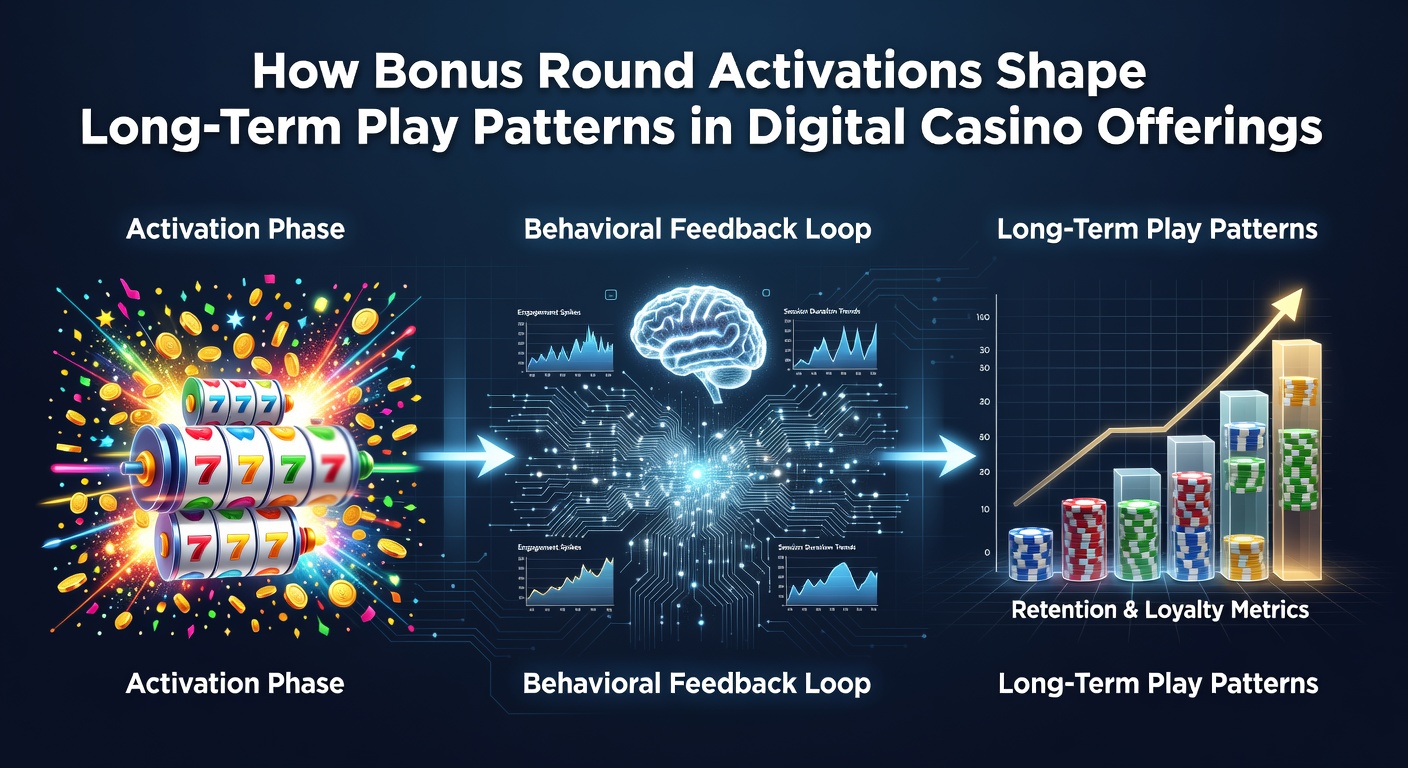
Bonus round activations function as pivotal moments within digital casino offerings, where specific trigger conditions shift gameplay from standard spins into specialized sequences that often deliver enhanced rewards or altered mechanics. These features appear across thousands of online slot titles, and industry data tracks how their frequency correlates with shifts in session duration alongside return visit rates over extended periods. Players encounter these rounds through symbol combinations, scatter triggers, or progressive meters, each designed with mathematical models that balance hit rates against payout distributions.
Mechanics Behind Activation Patterns
Digital platforms structure bonus rounds around random number generators calibrated to specific probabilities, so activation occurs at defined intervals rather than through player skill. Research from the University of Nevada's gaming studies program shows that titles with activation rates between 1 in 80 and 1 in 150 spins tend to sustain longer individual sessions compared to those with rarer triggers. The structure often incorporates multipliers, free spins, or pick-and-win elements that adjust the overall return-to-player percentage during the feature itself, creating a temporary spike in engagement metrics.
Operators monitor these patterns through backend analytics that log every trigger event across user accounts, revealing clusters where repeated activations within a single session increase the likelihood of continued play beyond the initial deposit. Data collected in early 2026 indicated that platforms adjusting bonus frequency saw measurable changes in average session length, with some configurations extending play by 15 to 25 percent over baseline models.
Observed Shifts in Player Behavior Over Time
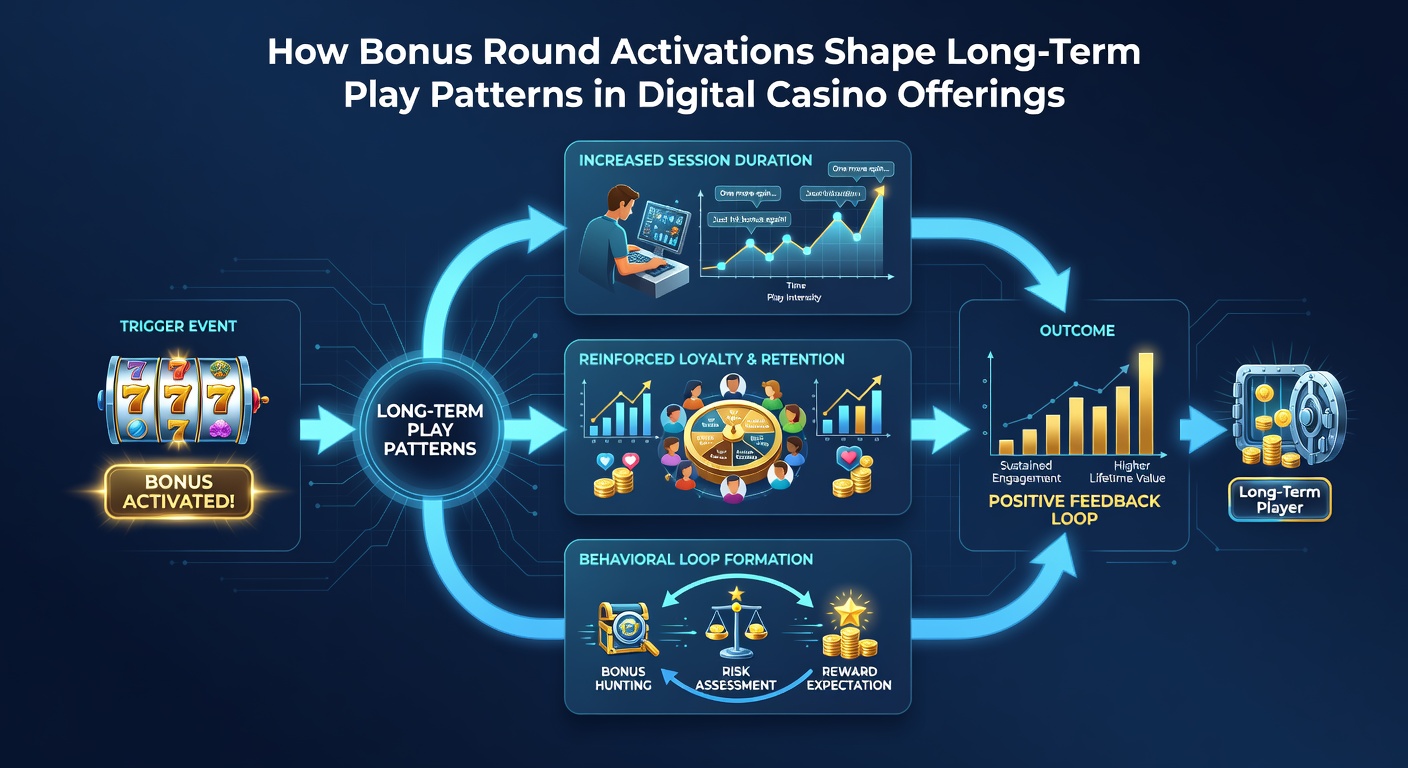
Long-term tracking reveals that consistent bonus round exposure influences return patterns, as players develop expectations around feature frequency based on prior experiences. Accounts with higher cumulative activations demonstrate elevated retention rates across multiple months, according to aggregated platform reports. This occurs because the anticipation built during base gameplay carries forward, prompting repeat logins even when short-term results vary.
Turns out the spacing between activations matters as much as their occurrence, since titles that cluster bonuses too closely sometimes produce shorter overall play windows once the novelty diminishes. Conversely, measured intervals encourage sustained investment as users chase the next feature. External analyses from the Australian Gambling Research Centre have documented similar trends in regulated markets, where bonus-driven engagement metrics correlate with loyalty program participation levels.
Data Insights from Industry Tracking
Platform operators compile activation statistics that feed into broader retention models, showing clear differentiation between low-frequency and high-frequency bonus designs. Figures released through Canadian gaming association summaries in June 2026 highlighted that games averaging one bonus round every 120 spins maintained steadier month-over-month player return rates than those exceeding or falling below that threshold. These patterns hold across demographic segments, though younger cohorts exhibit slightly faster adaptation to changing activation probabilities.
One study released by the Nevada Gaming Control Board tracked voluntary self-exclusion reversals alongside bonus exposure data, noting that players experiencing moderate activation levels showed different re-engagement timelines compared to those encountering either sparse or excessive features. The findings underscore how bonus mechanics interact with individual play histories rather than operating in isolation.
Design Adjustments and Market Responses
Developers respond to these behavioral signals by refining trigger thresholds during title updates, often testing variants across segmented user groups before full rollout. Adjustments made in mid-2026 incorporated player feedback loops that prioritized activation consistency, resulting in revised hit rates that aligned more closely with observed retention curves. Such modifications appear in patch notes and regulatory filings submitted to oversight bodies in multiple jurisdictions.
Market competition drives continued experimentation, as providers seek configurations that balance excitement against long-term sustainability. Reports indicate that titles incorporating variable bonus structures, where activation odds shift based on recent play volume, produce distinct engagement signatures compared to static models. These variations help explain why certain offerings maintain steady user bases while others experience sharper drop-offs after initial novelty periods fade.
Conclusion
Bonus round activations continue to serve as central elements shaping extended engagement within digital casino environments, with documented effects on session metrics and return frequencies across available datasets. Ongoing refinements by developers and operators reflect the measurable influence these features exert on player patterns, supported by analytics from regulatory and academic sources. As platforms evolve their offerings through 2026 and beyond, activation mechanics remain a primary variable in retention modeling and game design decisions.