9 Jun 2026
Sensory Elements Guiding Choices in Digital Reel Experiences at Premier Gaming Sites
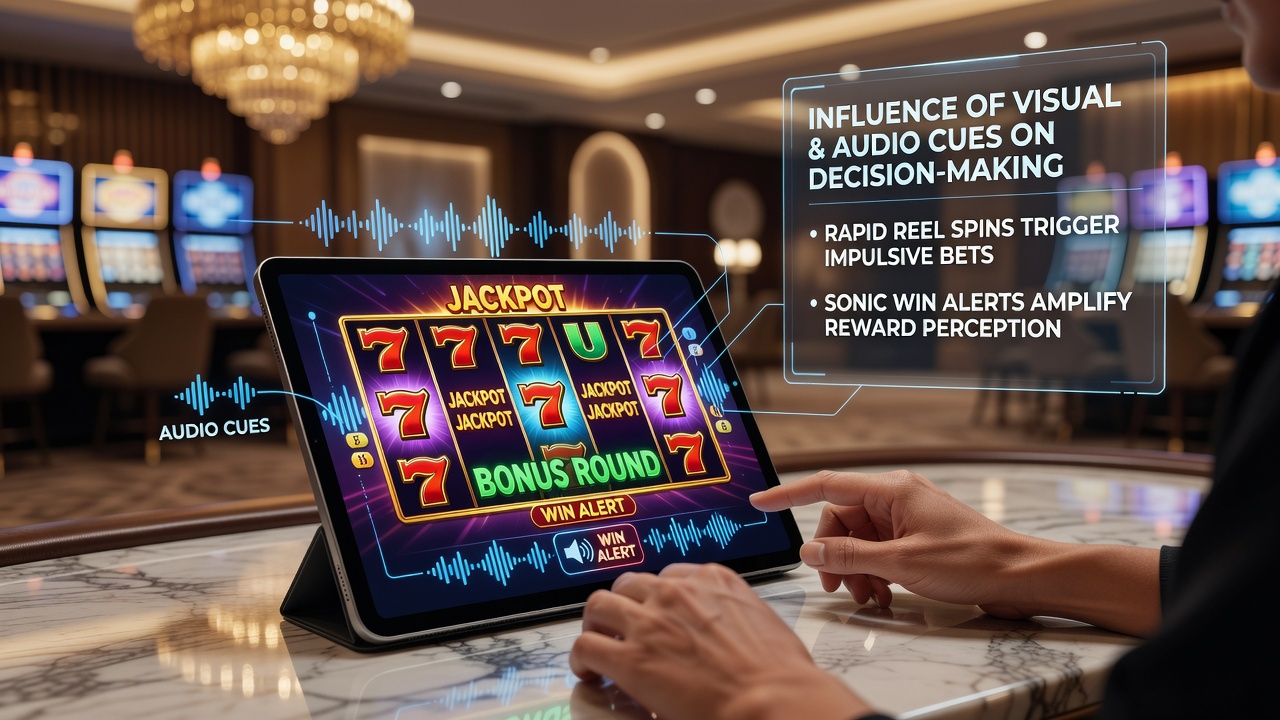
Established gambling destinations rely on carefully crafted visual and audio components to shape how participants approach each spin, and research from institutions such as the University of Nevada demonstrates that these elements directly affect attention allocation and risk assessment patterns. Observers note that bright color palettes combined with rapid animations draw focus toward potential winning combinations while subtle background tones maintain engagement across extended play periods.
Visual Components and Their Direct Effects on Selection Patterns
Designers at major platforms deploy flashing highlights around high-value symbols together with expanding reel frames that activate during near-miss sequences, and data from controlled experiments conducted by the Alberta Gambling Research Institute shows these techniques increase the likelihood of continued betting after initial losses. Players frequently encounter progressive lighting shifts that intensify as reels slow, creating a visual narrative that guides timing decisions on whether to adjust stake levels or switch games entirely.
Symbol clustering mechanics further influence choices because larger groupings trigger distinct particle effects and screen zooms that reinforce the perception of momentum, whereas isolated wins receive minimal visual emphasis. Those who study session logs across multiple jurisdictions report that participants exposed to high-contrast interfaces tend to select higher denomination machines more often than those using muted designs, even when payout percentages remain identical.
Audio Layers That Reinforce or Alter Betting Actions
Soundtracks at established venues incorporate layered audio tracks where celebratory chimes scale in volume and complexity according to win size, and findings published through the National Center for Responsible Gaming indicate these escalating melodies correlate with extended session durations. Background rhythms often maintain steady tempos during base play yet accelerate during bonus rounds, prompting quicker spin initiations as participants respond to the rising auditory pressure.
Distinctive reel-stop sounds serve as immediate feedback mechanisms that help users evaluate outcomes without constant visual monitoring, and operators have documented that customized audio profiles lead to measurable differences in how quickly individuals decide to cash out or reinvest winnings. Near-miss audio cues, featuring brief descending tones, appear in numerous platforms and contribute to the decision to place one additional wager in hopes of converting a close result into a full payout.

Combined Sensory Interactions During Live Sessions
When visual flashes align with corresponding audio spikes, the resulting multisensory events produce stronger memory traces that affect future game selection, according to longitudinal tracking conducted by researchers at Monash University. Participants in these studies demonstrated increased preference for titles featuring synchronized cue systems over those with independent visual or audio tracks, and session data collected through June 2026 continues to reflect this pattern across regulated markets.
Decision points such as activating autoplay functions or modifying bet sizes often coincide with peaks in combined sensory stimulation, creating windows where players process fewer external factors before confirming their choices. Platform analytics reveal that games engineered with tightly integrated cues experience higher rates of repeated play within single visits compared to titles that separate these elements.
Regulatory and Research Perspectives on Sensory Design
Gaming authorities in various regions require disclosure of certain design features that might affect player behavior, and reports from the Nevada Gaming Control Board highlight ongoing reviews of how visual intensity and audio volume interact with responsible gaming tools. Academic partnerships have produced models that predict decision velocity based on cue density, allowing operators to calibrate experiences while maintaining compliance standards.
Those analyzing aggregated play records note that sensory intensity levels correlate with specific outcome evaluation speeds, yet individual responses vary according to prior exposure and session context. Established destinations therefore implement tiered cue systems that adapt based on detected play patterns rather than applying uniform intensity across all users.
Conclusion
Visual and audio cues function as integral components within online slot environments at established gambling destinations, directly modulating attention, timing, and commitment decisions throughout each session. Evidence gathered from academic institutions and regulatory bodies across multiple continents confirms these elements operate through measurable pathways that shape player actions without requiring explicit instruction. As platforms refine their sensory architectures through 2026 and beyond, continued examination of these interactions remains essential for understanding decision processes in digital gaming contexts.