UK Government Raises Remote Gaming Duty to 40% Starting April 2026: A Game-Changer for Online Slots and Casinos
14 Apr 2026
UK Government Raises Remote Gaming Duty to 40% Starting April 2026: A Game-Changer for Online Slots and Casinos

The Announcement and Timeline
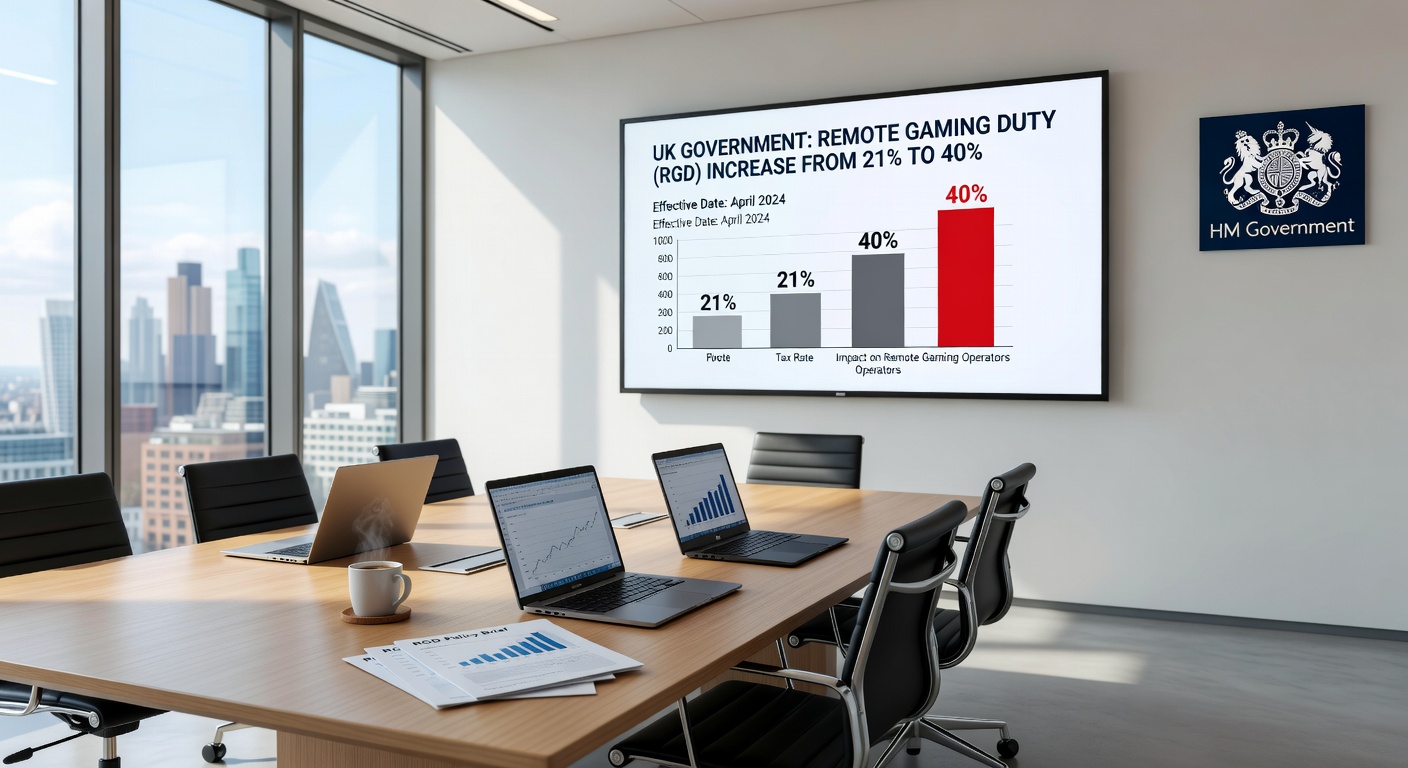
Chancellor Rachel Reeves unveiled the hike in the Remote Gaming Duty (RGD) during Budget 2025, setting the new rate at 40% on remote gaming revenue from April 1, 2026; this sharp increase from the previous 21% targets online slots, casino games, and similar activities offered by UK-licensed operators, while the move follows a public consultation that wrapped up earlier in the year.
Operators handling these products now face recalibrated financials, as the policy zeroes in on gross gambling yield from remote casino-style offerings; bingo duty, on the other hand, gets scrapped entirely, shifting the landscape for that segment in a contrasting direction.
What's interesting here is how the timing aligns with broader fiscal strategies, since the change kicks in precisely when many in the iGaming sector anticipate peak activity around spring promotions; data from the House of Commons Library outlines the mechanics, confirming the duty applies to all relevant revenue streams post-implementation.
Revenue Projections and Fiscal Impact
Government forecasts peg the additional revenue at £810 million for the 2026/27 fiscal year, climbing steadily to £1.16 billion by 2030/31; these figures stem from Treasury models that factor in current market growth trends, although operators brace for compressed margins as the duty bites deeper into profits.
And yet, the abolition of bingo duty softens the blow for that niche, potentially redirecting funds toward session-based players who favor those games; experts tracking gambling taxes note that such projections often hinge on steady player volumes, but here's the thing—online slots alone drive a hefty chunk of the targeted revenue, given their popularity among UK punters.
Figures reveal the RGD's scope covers everything from spinning reels on digital fruit machines to virtual blackjack tables, ensuring no UK-facing remote casino product escapes the levy; one analysis highlights how this could add up to 19 percentage points in effective tax burden, reshaping operator strategies overnight.
Who Gets Hit and How the Policy Works
All UK-licensed online operators dealing in remote casino products fall under the net, from giants like Entain and Flutter to smaller boutique sites; the duty calculates on gross gambling yield minus the stake returned to players, but now at that elevated 40% clip, which dwarfs rates in neighboring markets like Malta's 5% or even some EU peers.
Take one operator's compliance team—they're already poring over ledgers to segregate eligible revenue streams, since slots and casino games get ring-fenced from sports betting duties that remain unchanged; the government's detailed guidance on gambling duty changes spells out the nuts and bolts, emphasizing enforcement through Gambling Commission oversight.
But it's not just about the rate; the consultation feedback shaped exemptions and thresholds, although none dilute the core hike, leaving slots providers to absorb the shock through adjusted pricing or promotional tweaks; observers in the sector point out that free bets and bonuses might see tighter structuring to mitigate taxable yield.
Background: From Consultation to Budget Reality
The path to this policy stretched back through a consultation launched in late 2024, where stakeholders from the Betting and Gaming Council to independent analysts weighed in on affordability checks, problem gambling metrics, and yes, tax fairness; responses flooded in, with many flagging competitiveness against offshore unlicensed sites, yet the Treasury pressed ahead, prioritizing domestic revenue amid budget pressures.
Budget 2025 crystallized those discussions into law, announcing the RGD escalation alongside the bingo duty wipeout— a move that surprised few, since whispers of reform had circulated for months; researchers who've dissected the docs find the bingo abolition frees up operators to bundle it with slots offerings without punitive layers, potentially boosting hybrid lobbies.
Now, as April 2026 looms just months away, testing phases for software updates are underway at major platforms, ensuring tax calculations sync seamlessly; it's noteworthy that this isn't the first tweak—past hikes in 2014 nudged rates from 15% to 21%, but this 19-point leap marks uncharted territory, and those who've modeled it predict a ripple through affiliate partnerships and game supplier deals.
Industry Reactions and Operational Shifts
Trade bodies like the Remote Gambling Association voiced measured concerns during consultation, highlighting how the jump could drive traffic to unregulated markets; yet data indicates UK players stick largely to licensed sites, thanks to GamStop and advertising curbs, so retention strategies become the ball in operators' court.
One case saw a mid-tier casino operator simulate the impact, revealing a 15-20% squeeze on net margins for slots verticals; in response, firms are eyeing cost optimizations, from AI-driven player segmentation to renegotiated content royalties with providers like NetEnt or Pragmatic Play, although the duty hits operators directly, passing indirect costs downstream.
And while bingo halls cheer the duty's end—potentially revitalizing remote bingo with cross-sells to high-volatility slots—the real test comes in player behavior; studies from the Gambling Commission show slots command over 30% of online GGY, so any dip there echoes loudly, but early indicators suggest promo-laden loyalty schemes will counter it.
Turns out, the policy dovetails with the 2025 Gambling Act review, where white paper reforms already mandate friction in slots play; this fiscal layer adds another, prompting operators to fine-tune RTP disclosures and session limits even as taxes climb.
Broader Context in UK Gambling Landscape
UK gambling duties have evolved piecemeal since the 2005 Act, with remote taxes lagging land-based until recent alignments; this RGD surge positions Britain among higher-tax regimes globally, contrasting Germany's 5.3% on slots or Sweden's tiered 20-22%, and experts observe it funds public services from NHS boosts to levelling-up initiatives.
People in the know highlight a silver lining for bingo, where abolition could spark innovation like skill-based hybrids, drawing younger demographics away from pure slots grind; meanwhile, slots enthusiasts might notice subtler changes, such as fewer no-deposit bonuses or heightened verification, all to preserve compliance amid the levy.
So as operators gear up for the April 1 switch—complete with HMRC audits ramping up— the sector adapts, much like it did post-Finance Act 2014, when similar hikes spurred consolidation; today's landscape, packed with 200+ licensed remote casinos, sets the stage for mergers or exits among those who can't pivot fast enough.
Conclusion
The Remote Gaming Duty's climb to 40% from April 1, 2026, reshapes UK online slots and casino economics profoundly, funneling billions extra into Treasury coffers while erasing bingo's tax burden; projections hold steady at £810 million initial uplift, scaling to £1.16 billion, and licensed operators worldwide with UK exposure recalibrate accordingly.
With guidance solidified and consultations reflected, the policy underscores a maturing regulatory framework, where fiscal heft meets player protection; those monitoring the beat expect quarterly HMRC reports to track real-world yields against forecasts, revealing if growth trajectories hold or if black-market siphons intensify—that's where the rubber meets the road come 2026/27 close.